Finding Where The Water Really Gets In
Water rarely drips straight down from the hole. It runs along the underlayment, follows a rafter, and shows up on the ceiling six or eight feet from where it entered. That's why so many leaks get "fixed" twice.
We start in the attic when we can, looking for wet decking, stained wood, and damp insulation. Then we go up top and check everything uphill from there: flashing, pipe boots, valleys, vents, and any nail holes from satellite dishes or old antennas.
The leaks we see most in San Antonio
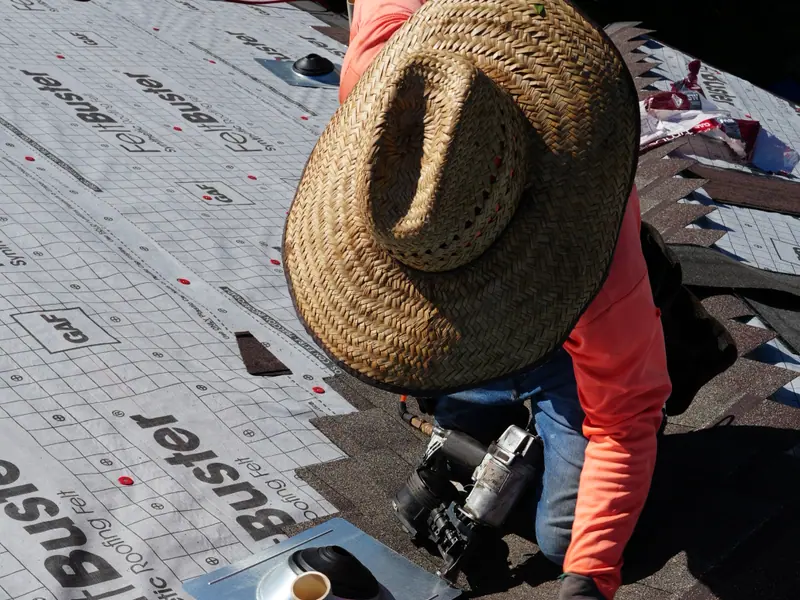
- Pipe boots. The rubber collar cracks after years in the sun and lets water run down the vent pipe.
- Chimney flashing. Metal flashing pulls away from brick or stone, or was never installed with a proper counter-flashing.
- Valleys. Where two roof slopes meet, water moves fast, and worn or poorly cut shingles let it under.
- Wall flashing. Where a lower roof meets a second-story wall, missing step flashing is a common culprit.
- Storm damage. Missing shingles or hail hits that broke the mat and let water into the decking.
- Old vents and turbines. Rusted bases and cracked seals around roof penetrations.
How We Fix A Roof Leak
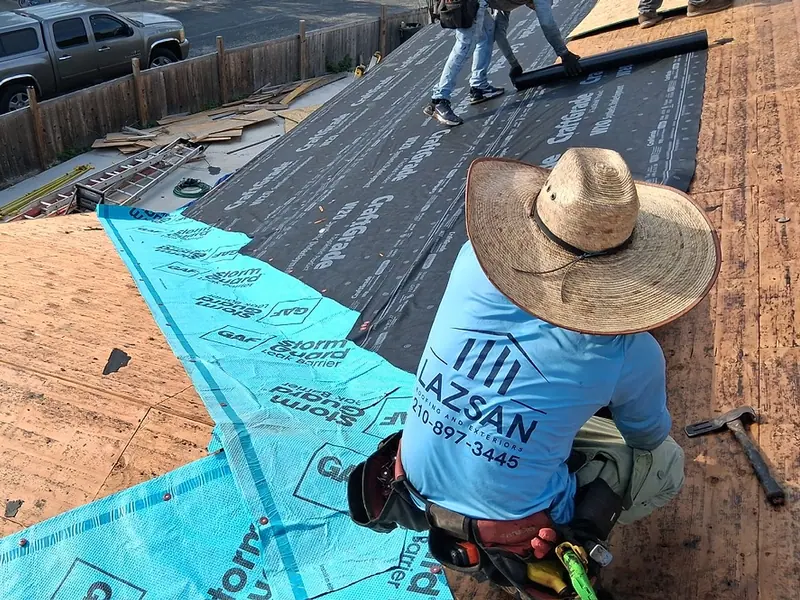
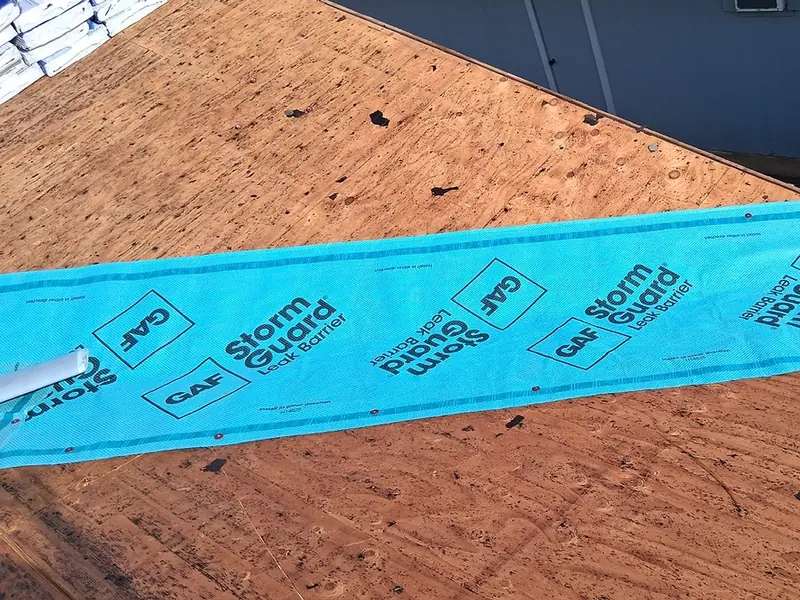
Once we know the source, we fix it the way it should have been built. That might mean a new pipe boot and the shingles around it, re-flashing a chimney, or cutting out a section of valley, laying leak barrier underneath, and re-shingling it.
If the water has been getting in for a while, the decking may be soft. We replace damaged plywood before closing it back up, because new shingles over rotten wood won't hold.
James E. hired us for a damaged section of roof that was causing a leak. He said we arrived on time, finished efficiently, and the leak was completely resolved.
Chimney Leaks
Chimneys are one of the hardest spots on a roof to keep dry. Brick and stone soak up water, mortar cracks, and the flashing has to move with the house. We replace step flashing and counter-flashing and seal it to the masonry so water sheds off instead of tracking in behind.
When Water Is Coming In Now
Call us and tell us it's active. We'll get the area tarped to stop more damage, then come back for the permanent repair once the roof is dry enough to work on.
- Tarp to stop more damage
- Find the source
- Photos before and after
- Repair with new materials
- Decking replaced if soft
- Cleanup when we're done