Roof Replacement In Leon Valley
Leon Valley is a small city tucked inside Loop 1604 along Bandera Road and Huebner Road. Most homes are single-story brick ranches from the 1960s through the 1980s, which means many roofs are on their second or third replacement.
Roofs here took a beating in the 2016 hailstorm, and plenty of them were replaced in a hurry afterward. Rushed installs show up years later as nail pops, lifted shingles, and leaks at pipe boots.
How We Handle A Leon Valley Re-Roof
- Full tear-off to the deck
- Decking repairs with photos
- Leak barrier in the valleys
- New pipe boots and flashing
- Ridge vent sized for the attic
- Cleanup before we leave
Ranch roofs are usually simple, so most of them are finished in a single day.
Roofing For Leon Valley Ranch Homes
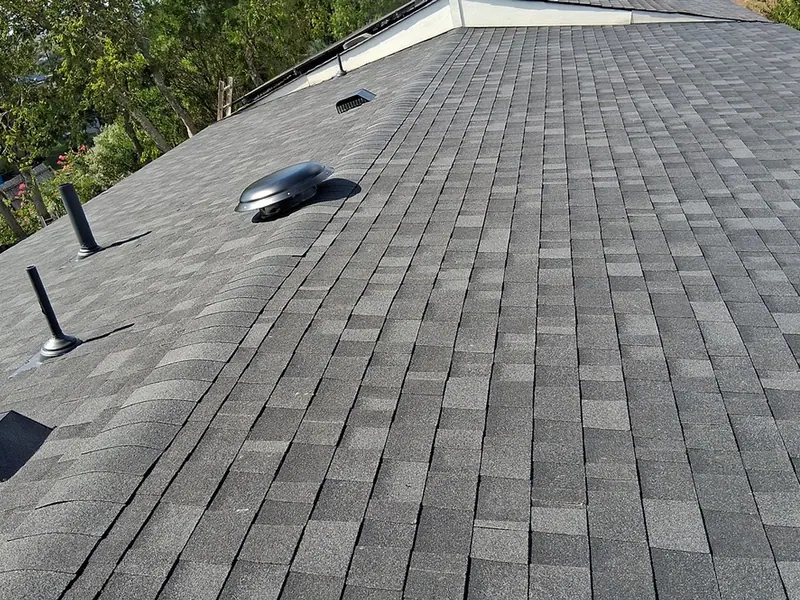
Single-story brick ranches make up much of Leon Valley, and their roofs share a few traits. They're usually simple hip or gable designs with long eaves and a moderate pitch, which makes them quicker to replace than a complex two-story. They also tend to be under-ventilated, which bakes shingles from below during long Texas summers.
When we replace a ranch roof, we look at how hot air leaves the attic. Adding ridge vent or correcting the intake at the soffits can lower attic temperatures and help the new shingles last longer.
When A Repair Makes More Sense
Not every leak in Leon Valley means a new roof. If your roof was replaced in the last ten years and the problem is one spot, a repair is usually the smart choice. The most common repairs we do here are cracked pipe boots, nail pops that let water in around the fasteners, and flashing that has pulled away from a chimney or wall.
- Nail pops. Nails that backed out push up the shingle above them and open a path for water.
- Pipe boots. Rubber collars crack in the sun after several summers.
- Wall flashing. Where a patio cover or addition meets the house.
Patio Covers And Low-Slope Sections
Many Leon Valley homes have a patio cover or a back room added onto the original house. Those sections often have a lower pitch than the main roof, and shingles on a pitch that's too low will leak no matter how well they're installed. We'll check the slope and recommend a material that's made for it.

