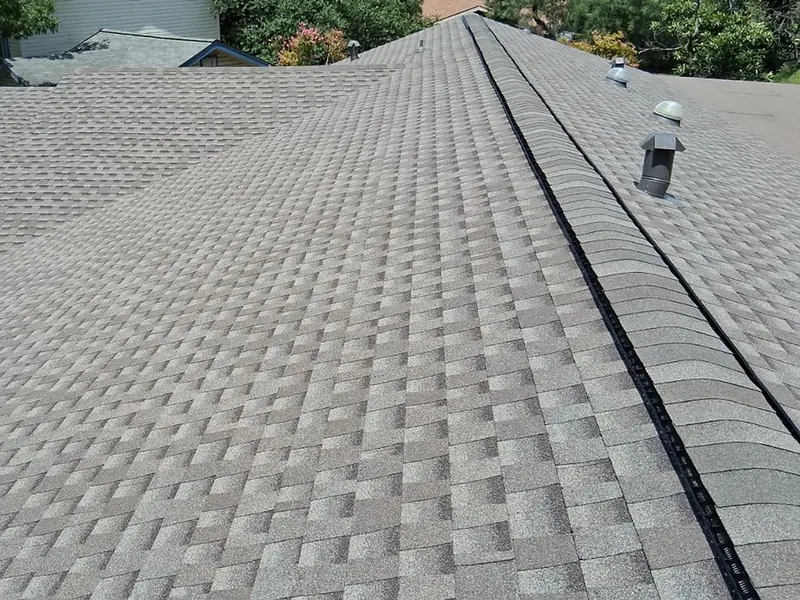
Roofers Serving Castle Hills
Castle Hills is a small city inside Loop 410, known for wide lots, mature oaks, and long ranch-style homes from the 1950s and 1960s. Long rooflines and low pitches look classic, but they also drain slower, so worn shingles leak sooner.
Many of these homes have had additions over the years. Where a newer roof ties into the original, we often find flashing that was patched instead of built properly.
Typical Fixes On Castle Hills Roofs
- Re-flashing where additions meet the original roof
- Replacing soft decking along long eaves
- Clearing and protecting valleys under heavy tree cover
- Low-slope sections over patios and sunrooms
If part of your roof is too flat for shingles, we'll tell you and recommend a material made for low slopes.
Low-Pitch Roofs On Castle Hills Ranches
Long, low ranch homes are part of what makes Castle Hills look the way it does. The trade-off is drainage. On a low-pitch roof, water moves slowly, and wind-driven rain can push under shingles that are worn or poorly sealed. That's why leaks on these homes often show up along the eaves and in the valleys first.
When we replace a low-pitch roof, we use leak barrier in the valleys and along the eaves, and we follow the shingle maker's rules for low slopes. Some sections are simply too flat for shingles, and those get a material designed for low slopes instead.
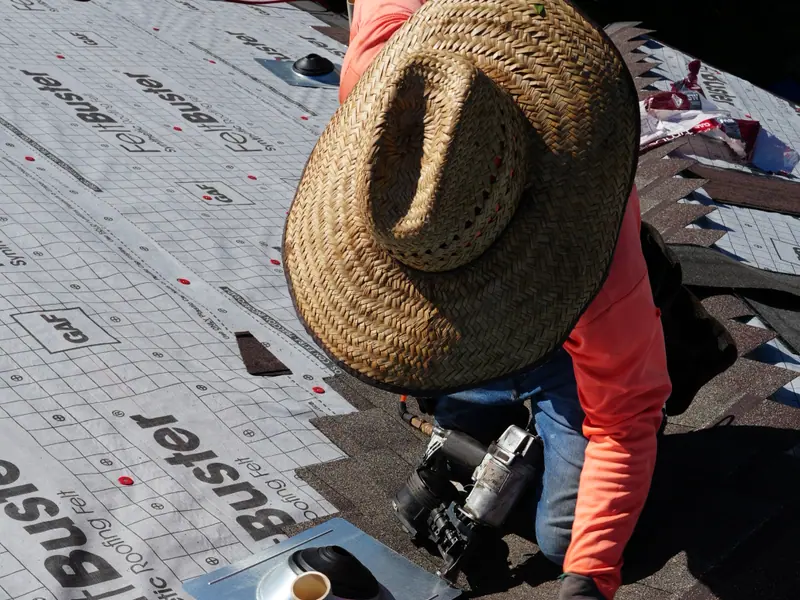
Roof Repairs Under Mature Oaks
Castle Hills is known for its big oaks, and they bring roof problems along with the shade. Leaves pile up behind chimneys and in valleys, limbs scrape the shingle surface in the wind, and shaded slopes stay damp after rain. Over time, those spots wear out well before the rest of the roof.
- Clearing valleys and areas behind chimneys
- Replacing shingles worn by branches
- Checking shaded decking for soft spots
- Recommending trimming before a new roof goes on
Additions, Carports, And Mixed Roof Lines
Over sixty-plus years, many Castle Hills homes have gained a den, a carport, or a second garage. Each addition creates a new place where two roof lines meet. If the tie-in was done without proper flashing, it will leak sooner or later.
We open these areas up, replace the flashing, and rebuild the tie-in so the water has a clear path off the roof. If the addition has a different pitch than the main house, we'll explain the best material for each part.

